The Shortcut (1958)
not every road leads home
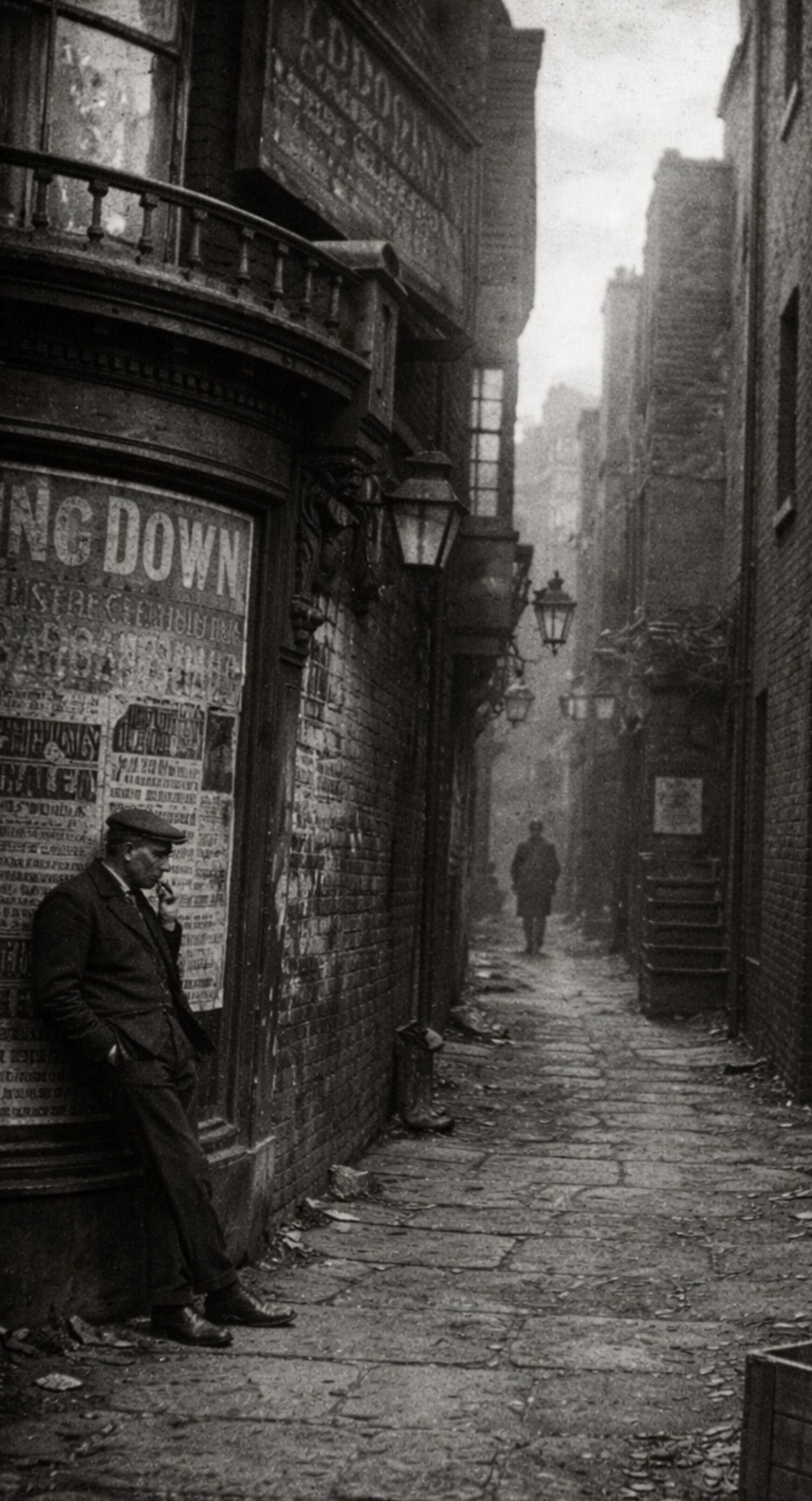
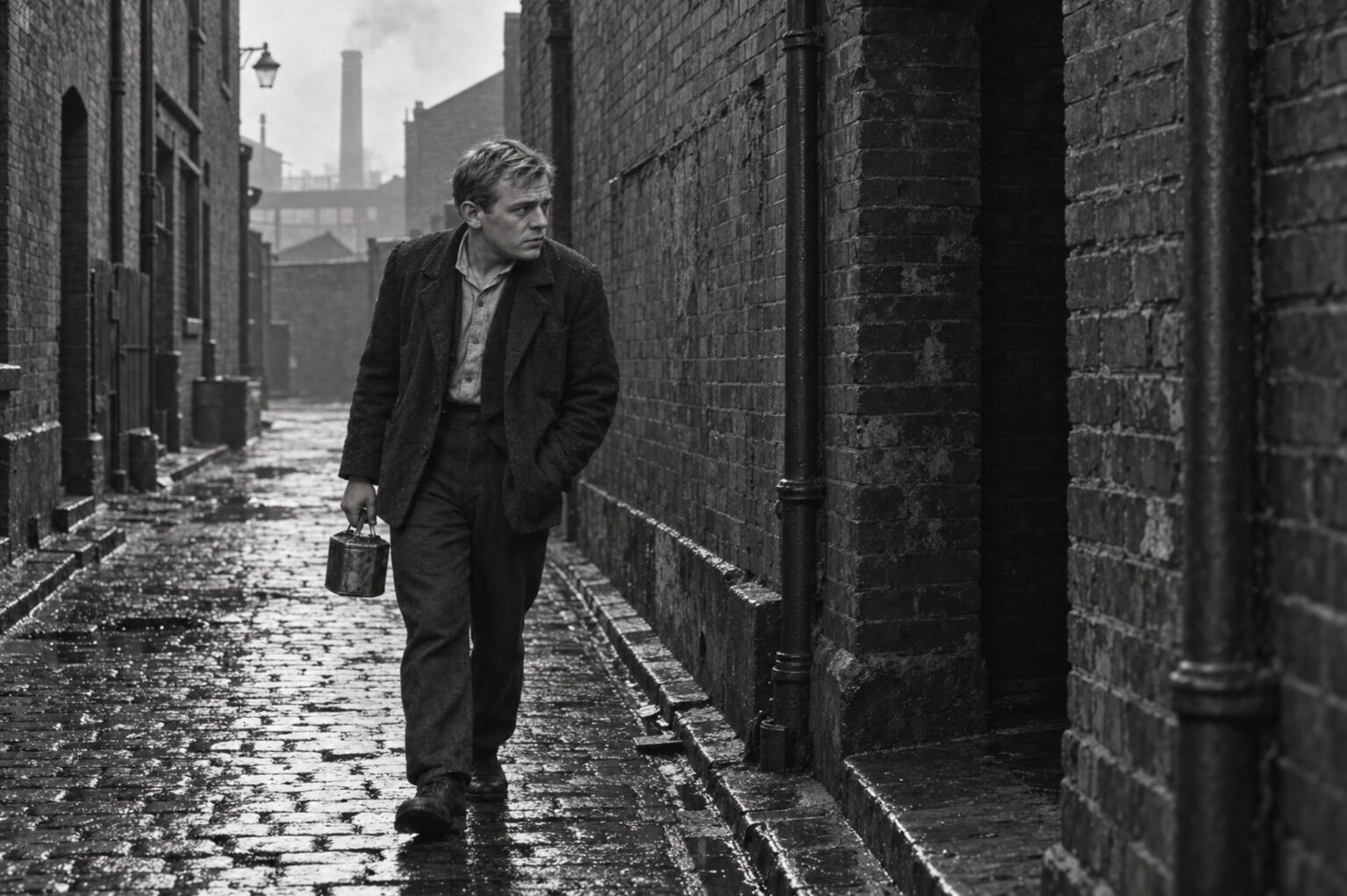
Released in spring 1958, ‘The Shortcut’ was the second feature produced by Crimea Street Films and the earliest surviving example of the visual style that would later come to define the studio’s work.Directed by John Mercer the film centred on a young factory labourer who begins using an isolated cobbled passageway to cut through the town on his walk home each evening. Over time, the route becomes less a convenience than a quiet ritual, with the film gradually suggesting that the shortcut represents both escape and entrapment in equal measure.Shot on an extremely limited budget across several industrial districts in Lancashire, production conditions were reportedly difficult throughout. Cast members later recalled filming in near-freezing conditions with minimal lighting and long delays caused by persistent rain and electrical faults within the temporary sound equipment.Though sparse in plot even by later Crimea Street standards, ‘The Shortcut’ attracted modest attention for Mercer’s unusually composed visual framing and his insistence on treating ordinary back streets with near-architectural seriousness. Repetition of walls, cobbles, ginnels and terraced geometry became central visual devices throughout the film.
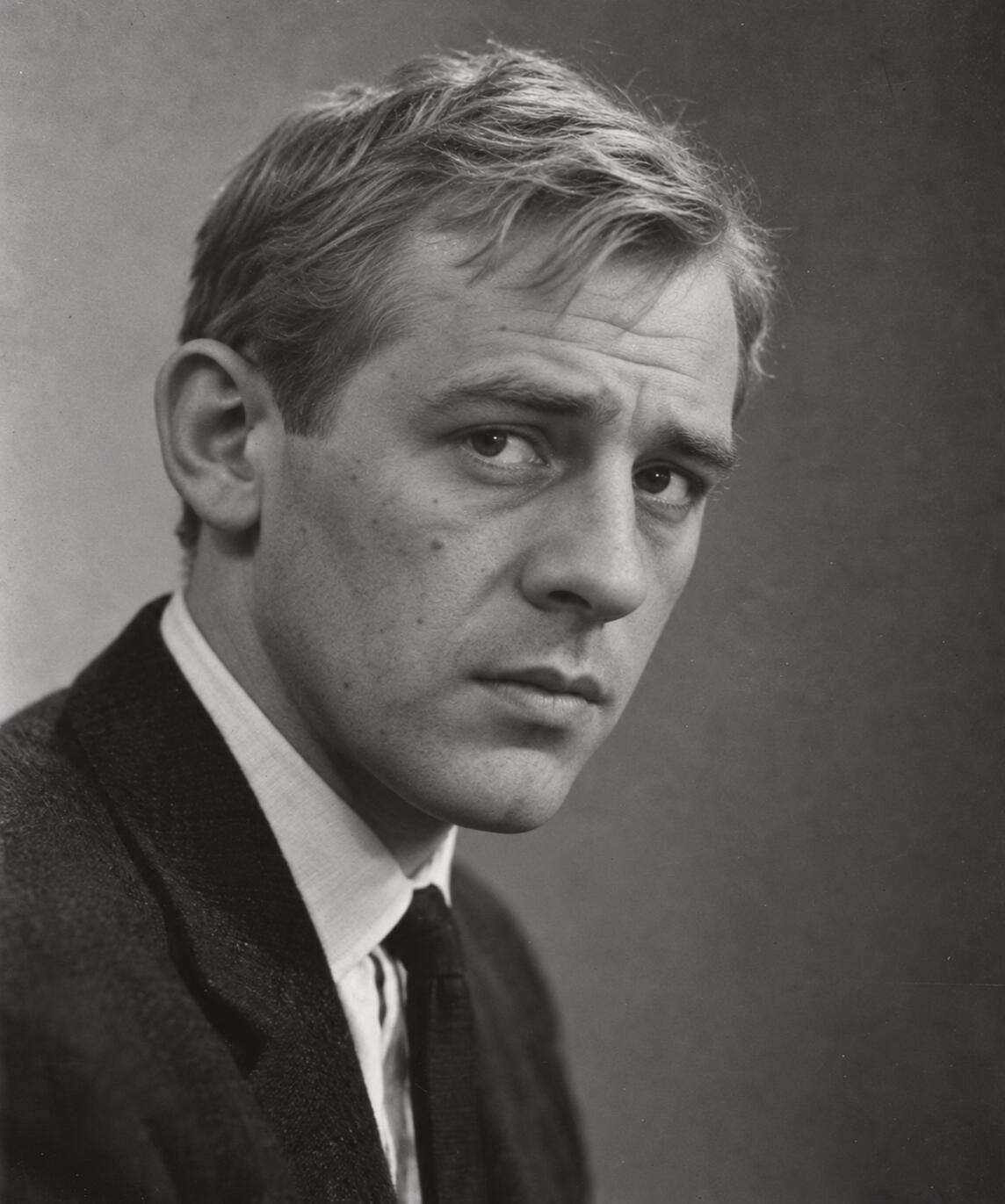
Peter McDermott (1930–1998)Born in Goosnargh, Peter left school at fifteen and worked briefly as an apprentice draughtsman before becoming involved with a local amateur dramatic society. He later joined a touring repertory company, where his quiet manner and unpolished appearance led to a succession of roles as labourers, soldiers and young men burdened by circumstances they rarely discussed.In The Shortcut, McDermott played factory worker Eric Mullen. Much of his performance was built around repeated actions: leaving work, crossing the same streets and entering the passageway each evening. With relatively little dialogue, he conveyed Mullen’s growing attachment to the route through small changes in pace, posture and expression.The film brought him modest attention, although he never became a conventional leading man. He continued working in regional theatre and television throughout the 1960s and 1970s, becoming particularly associated with characters who appeared ordinary until placed under pressure.McDermott was famous among colleagues for his ability to fall asleep almost anywhere. During one repertory production in Oswaldtwistle, he reportedly slept through an entire interval while standing behind a piece of scenery and woke only when another actor opened the door against him.He was later diagnosed with a rare form of narcolepsy.He retired from acting in 1987 and remained in Lancashire, where he spent much of his time restoring old radios despite admitting that he rarely listened to them. He died in his sleep in 1998, aged 68.
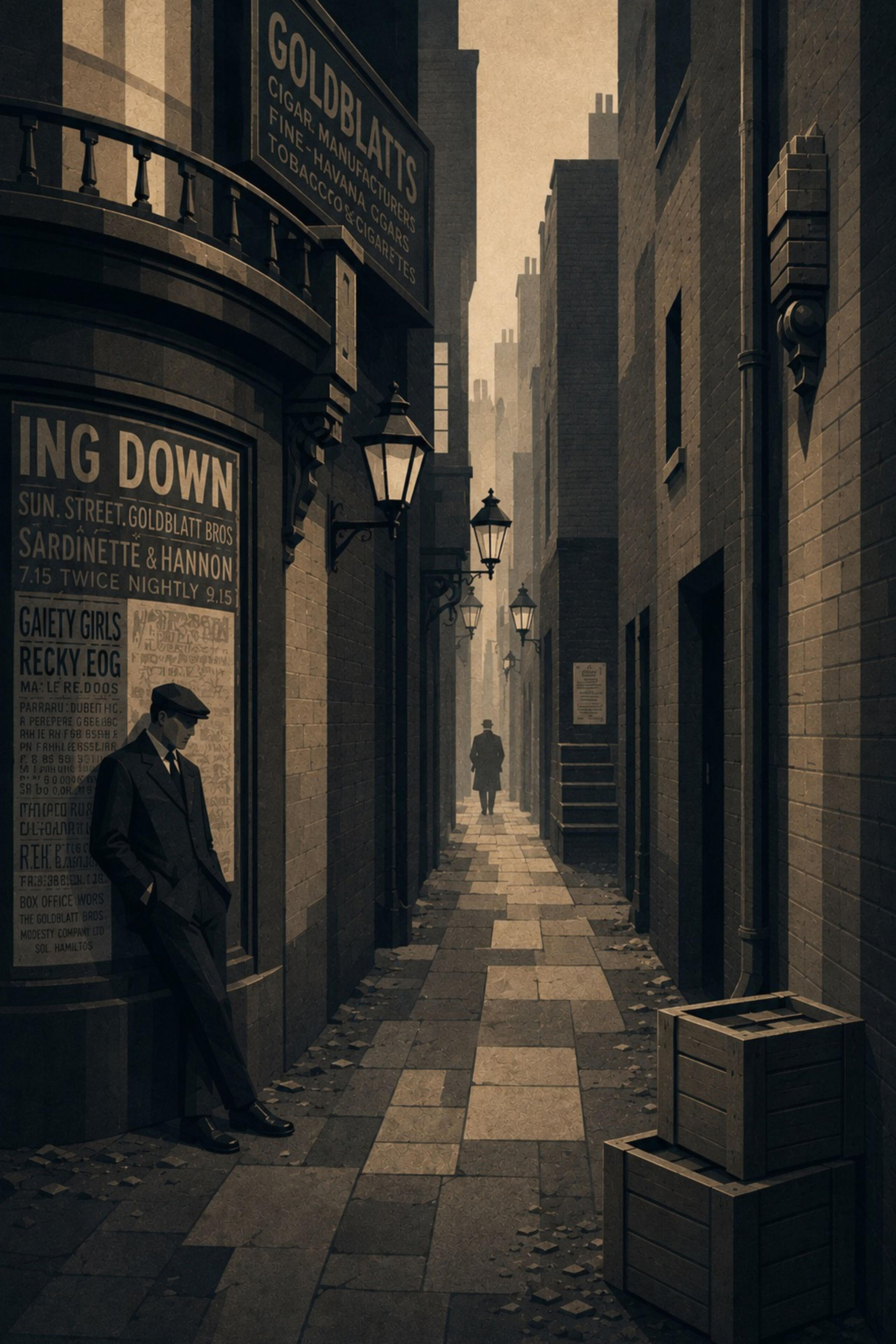
The Shortcut reduces the northern back street to a composition of towering brickwork, repeating lamps and narrowing perspective.The passage draws the eye towards a solitary figure in the distance, while the man waiting beneath the theatre bills introduces a second, quieter point of tension.Rendered in charcoal, tobacco brown and muted cream, the image combines the architectural precision of Art Deco illustration with the atmosphere of an early British film still.Strong verticals and deep shadows turn an ordinary passageway into something monumental, theatrical and faintly unsettling.Available exclusively through FCSF, this artistic interpretation is available unframed on 240 gsm art paper and measures 16 x 20 inches.
What did the critics think?
Contemporary reviews remained sharply divided.The ‘Northern Daily Telegraph’ described it as:“A strange little production in which very little occurs beyond walking, waiting and visible disappointment.”While the ‘Liverpool Echo’ offered more cautious praise:“Mercer photographs industrial Britain with a care usually reserved for cathedrals.”Audience response proved limited and several cinemas reportedly moved the film to afternoon screenings after weak evening attendance. One cinema manager in Rochdale allegedly remarked:“People kept expecting something to happen.”Despite its commercial failure, later critics often identified the film as an important early indicator of the studio’s developing identity: emotionally restrained, visually meticulous and quietly preoccupied with the psychological weight of ordinary environments.Although overshadowed by later productions, surviving posters and publicity stills from ‘The Shortcut’ remain among the most recognisable early material associated with Crimea Street Films, particularly for their stark typography and severe architectural compositions.
From the archive
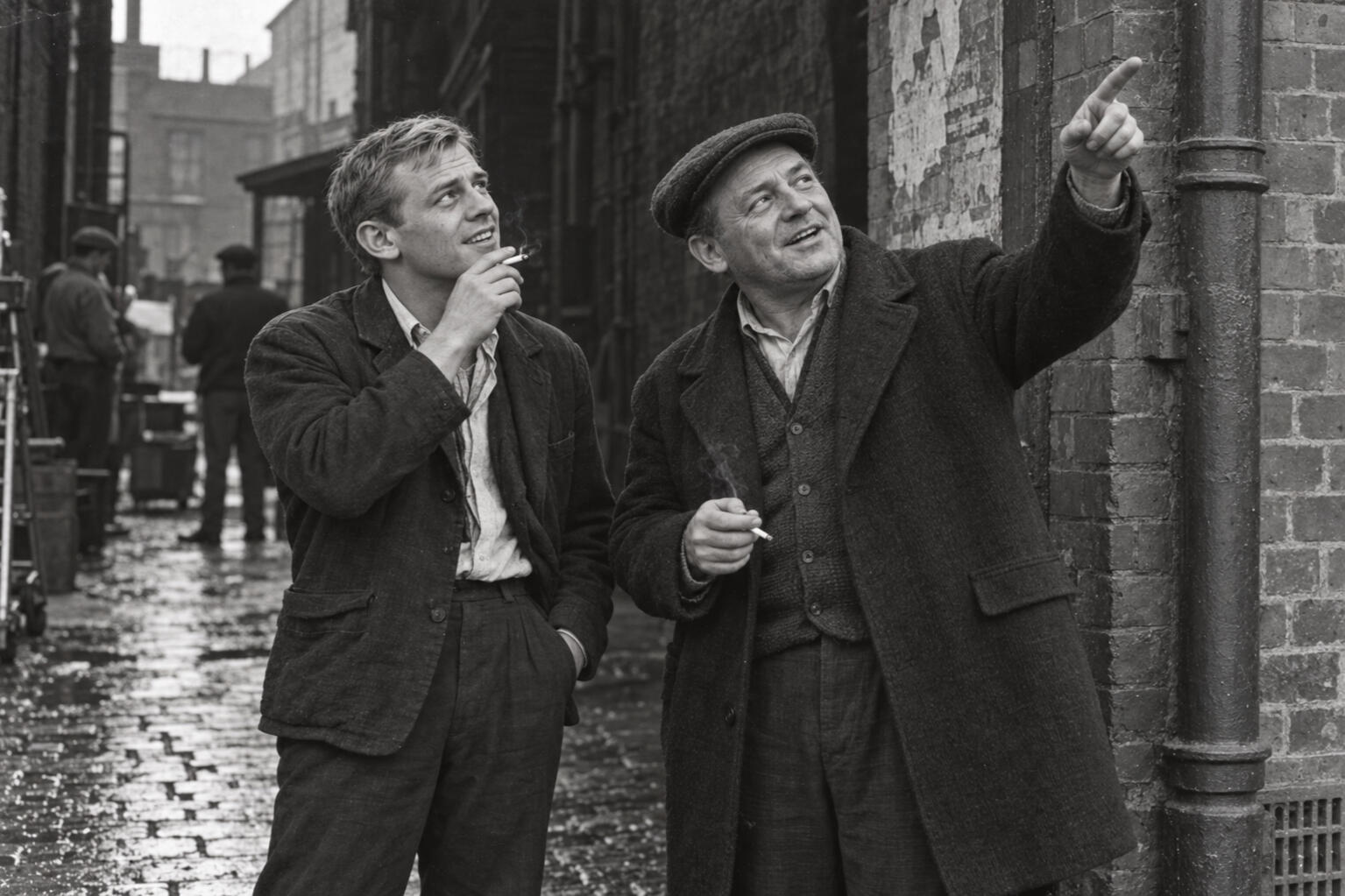
Filming in the passage was repeatedly interrupted by stray dogs, several of which treated the carefully dressed set as a public convenience.
One afternoon’s continuity notes contain only the instruction: “Wait for dog. Wash wall.”
Publicity shot from the archive
The artwork of Reg Baines
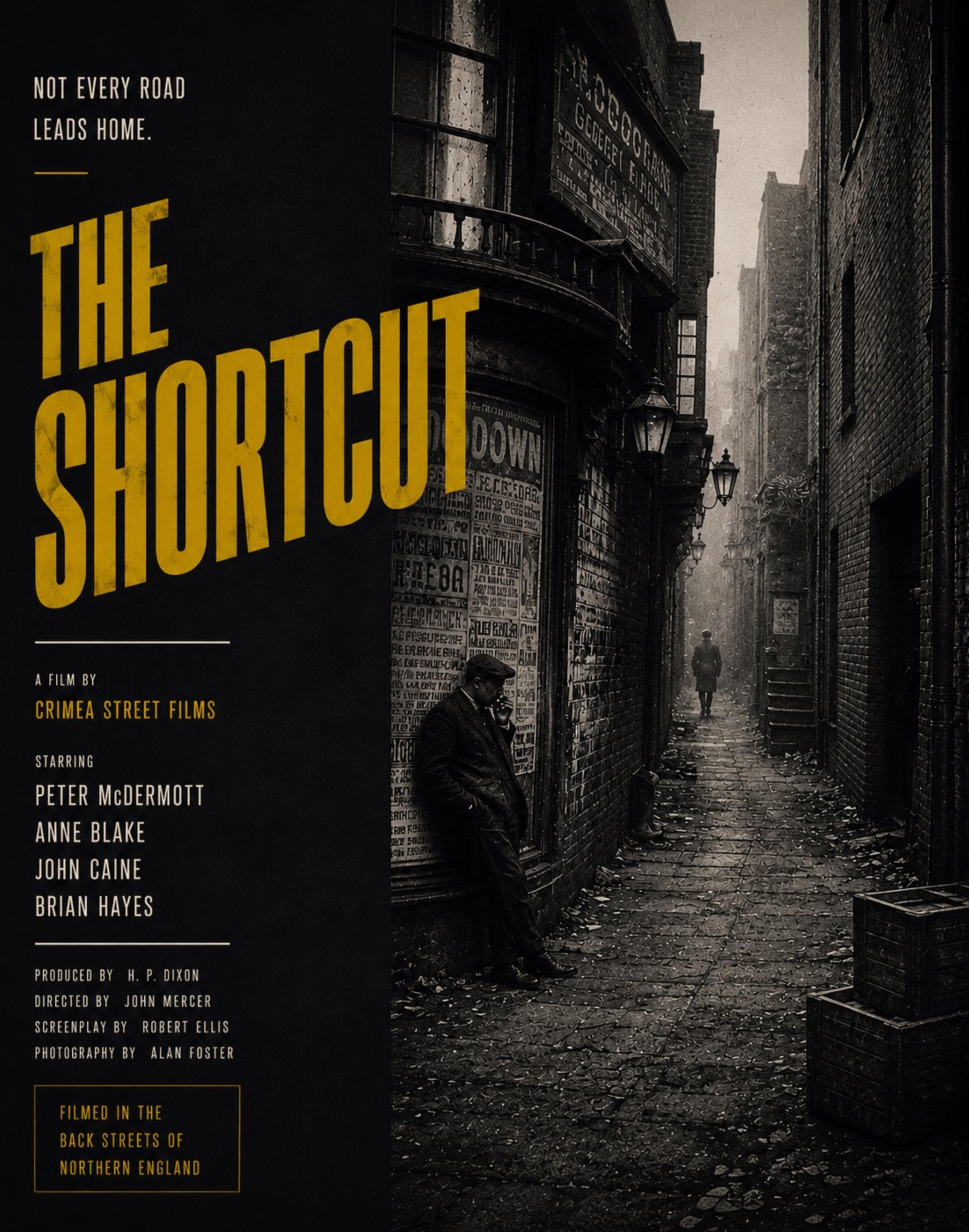
The original posters created by Reg Baines are synonymous with the studio and are very much part of its history.They would have been seen throughout the North of England outside cinemas, on hoardings and in places such as train stations.Most of them were damaged in a fire at the studio in late 1966, but we are delighted to now work with Parbold based artist, Brian Astley.He has faithfully reproduced each poster to a standard that our Reg would have been proud of and each one is available unframed on 240 gsm art paper as a 16 x 20 inch homage to the films we celebrate.